
close
close
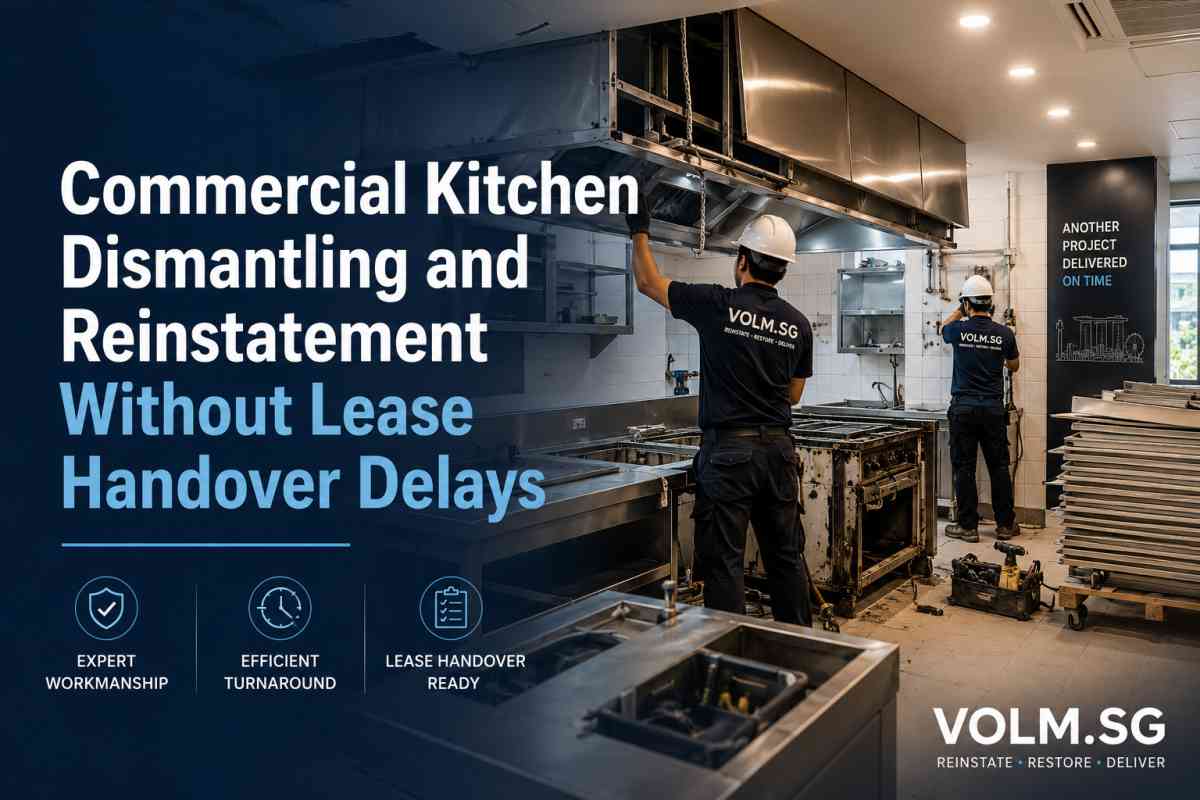
Commercial kitchen dismantling and reinstatement removes all tenant-installed kitchen equipment, fixtures and mechanical and electrical systems, then restores the premises to the original condition specified in the lease agreement.
For most F&B tenants in Singapore, the entire process typically takes two to four weeks, and restaurant reinstatement costs range from SGD 25–40 per square foot, depending on kitchen complexity, equipment volume and the scope of M&E modifications that need reversing.
If you're managing a lease expiry with a fully fitted commercial kitchen, you already know the pressure. Restaurant reinstatement is more complex than office reinstatement. There are gas lines to disconnect, exhaust systems to remove, grease traps to decommission and heavy equipment that requires specialist handling - all before the actual reinstatement works even begin.
Most F&B tenants face a frustrating coordination problem: one contractor handles the dismantling process while another manages restoring walls, ceilings and floor finishes. Schedules overlap, accountability gaps appear, and handover deadlines slip. The result is often holding-over charges, withheld security deposits or landlord disputes that could have been avoided with careful planning.
VOLM manages both dismantling and reinstatement as a single, integrated reinstatement project, providing reinstatement services as one coordinated scope.
From the initial site assessment through to the final inspection with your landlord, we coordinate every phase under one timeline - supporting a smooth transition during relocation or lease expiry so you can focus on your business transition rather than chasing multiple professional contractors.
The goal is straightforward: complete your F&B reinstatement on time, within the agreed scope, and to a standard your landlord will accept at handover with full compliance.
Here's what makes an integrated approach practical for commercial kitchen reinstatement:
Instead of managing separate dismantling and reinstatement contractors, you get a streamlined reinstatement process focused on meeting your lease requirements.
Getting from a fully fitted commercial kitchen to a clean, landlord-accepted handover follows a structured sequence. Planning and inventory are essential for kitchen dismantling projects, and the sequence of dismantling tasks can affect both safety and efficiency.
Every reinstatement project starts with understanding what needs to happen. We review your tenancy agreement to map reinstatement obligations against the original handover condition. Documenting original conditions helps avoid disputes over damages later.
This includes identifying all commercial kitchen equipment, M&E modifications and structural changes that require removal - from built-in furniture and decorative panels to false ceilings and added electrical installations. We then coordinate with building management on work permits, access restrictions and after-hours requirements.
Documentation is critical during the dismantling and reinstating process. We produce a detailed scope document that defines every item to be removed, every surface to be restored and every M&E system to be reinstated - so there are no surprises once works begin.
Proper isolation of utilities is a key safety measure before dismantling. All gas, electrical and water connections are disconnected by licensed professionals before any equipment is moved, with the dismantling team following applicable safety standards throughout isolation and removal.
Utility disconnection must be handled by licensed professionals - this is both a safety requirement and a regulatory one.
The dismantling phase covers:
Operators must employ personal protective equipment during kitchen dismantling, and safety protocols must be followed to prevent injury and equipment damage.
Each component is carefully dismantled, labelled where applicable (labelling components during disassembly aids in reassembly if equipment is being relocated), and removed from site with proper waste disposal procedures.
Deep cleaning is required before reinstatement begins. Grease-laden surfaces, oil-stained floors and contaminated ducting must be thoroughly cleaned to meet both fire safety and health standards.
Compliance with Singapore Food Agency regulations is mandatory, as is adherence to SCDF fire safety requirements for kitchen exhaust system decommissioning.
Once dismantling is completed safely, reinstatement works begin. Commercial kitchen reinstatement often includes restoring plumbing and electrical systems to their original configuration.
Key reinstatement activities include:
Reinstatement must adhere to fire safety and building regulations. The objective is returning the commercial space to a condition that matches landlord requirements and lease specifications - ready for the next tenant's fit-out.
Most reinstatement contractors in Singapore focus on either office spaces or general commercial renovation. F&B reinstatement sits in a different category entirely.
Dismantling kitchen infrastructure involves complex mechanical systems, and the interface between kitchen equipment removal and building services creates risks that general contractors may not anticipate, which is why VOLM brings extensive experience with F&B reinstatement complexity.
Here's where an integrated approach provides practical advantages:
If you've managed various commercial projects, you'll know the difference between a contractor who understands F&B complexity and choosing the right contractor for F&B strip-out and reinstatement.
We believe credibility comes from specifics, not superlatives.
Across our commercial reinstatement and commercial projects, the factors we track most closely are:
We do not invent case study outcomes or project metrics. Where we can share specific project data with your permission, we will - but we'd rather you judge our work by the clarity of our scope planning and the precision of our delivery.
VOLM's commercial kitchen dismantling and reinstatement services are designed for:
Review your lease for specific reinstatement obligations before hiring any contractor. If your tenancy agreement requires restoring the premises to original condition, you'll need a reinstatement contractor with the right scope understanding.
Restaurant reinstatement costs range from SGD 25–40 per square foot, though costs depend on the size and scope of modifications made. Complex restorations can significantly increase reinstatement costs beyond these ranges.
| Factor | Impact on Cost |
|---|---|
| Kitchen size and layout complexity | Larger kitchens with multiple zones increase labour and materials |
| Commercial kitchen equipment volume | More equipment requires more disconnection, removal and disposal time |
| M&E modification extent | Heavy electrical, gas and ventilation changes cost more to reverse |
| Floor and wall condition | Oil-stained or heat-damaged surfaces often need full replacement |
| Building access restrictions | After-hours or weekend-only work increases labour costs significantly |
| Timeline urgency | Expedited schedules require more crews and may attract premium rates |
| Waste disposal requirements | Hidden costs may include waste disposal and pest control |
| Phase | Duration |
|---|---|
| Scope planning and permit approvals | 1 week |
| Kitchen equipment dismantling | 1-2 weeks |
| M&E and structural reinstatement | 1-2 weeks |
| Site cleaning and final inspection | 2-3 days |
For spaces up to approximately 5,000 square feet, the total timeline typically falls within four to eight weeks including planning. F&B spaces with heavily installed kitchens may lean toward the upper end.
Planning early helps avoid rush fees and delays in reinstatement. Engage contractors experienced in F&B reinstatement regulations and ask contractors for examples of previous F&B reinstatement projects before committing.
Scrap metal from stainless steel benches, ducting, copper piping and commercial kitchen equipment can offset a portion of your reinstatement costs.
The actual recovery value depends on current scrap prices, equipment condition, deinstallation labour and transport costs. For larger kitchens with substantial stainless steel and copper content, the offset can be meaningful. For smaller installations, the net benefit may be modest after deinstallation costs.
These are the costly mistakes we see most often in F&B reinstatement projects:
If your lease expiry is approaching and you need to plan your commercial kitchen dismantling and reinstatement, the sensible next step is understanding your full scope and timeline before committing to any contractor.
Share the following details with us, and we'll provide a detailed scope assessment and timeline within 48 hours:
We'll review your lease requirements, identify the key cost factors and provide a clear breakdown of what the reinstatement project involves - so you can make an informed decision with full visibility over scope, cost and schedule.
No pressure, no obligation. Just the planning clarity you need to manage your handover with confidence.
The reinstatement process can take several weeks for restaurants, typically two to four weeks for the physical works plus one week for planning and permit approvals. Duration depends on kitchen size, equipment volume, M&E complexity and building management access restrictions. Mall locations with after-hours-only work requirements and site inspections may extend the timeline. For spaces up to 5,000 square feet, most projects are completed efficiently within four to eight weeks from engagement to handover.
We handle all standard commercial kitchen equipment including commercial ovens, fryers, steamers, refrigeration units, walk-in freezers, exhaust hoods, ventilation systems, grease traps, gas lines, water supply lines, electrical installations, food preparation benches, sinks, dishwashers, fire suppression systems and heavy equipment such as dough mixers or industrial steamers. Reinstatement typically involves removing all tenant-installed fixtures and restoring mechanical and electrical systems to the original configuration specified in the lease agreement.
Yes. We coordinate with building management on work permits, method statements, insurance requirements and scheduled site inspections. This includes managing access restrictions, noise limitations and after-hours work scheduling. For most commercial lease agreements, building management approval is required before any reinstatement works can begin. We factor approval timeframes into the project programme so they don't become a source of delay.
It can, but the offset varies. Stainless steel, copper and aluminium from commercial kitchen equipment, ducting and piping carry market value. For larger kitchens with substantial metal content, scrap recovery may offset 5–15% of total reinstatement costs. For smaller kitchens, the net benefit after deinstallation labour and transport may be more modest. We assess recovery potential during the site assessment and include it as a line item in your quotation so the offset is transparent.
A final inspection is necessary to confirm adherence to lease obligations. If your landlord identifies defects, we address them within the agreed rectification period. To minimise this risk, we conduct our own pre-handover quality check against the lease handover checklist and landlord specifications before inviting the formal inspection. This smooth handover process significantly reduces the likelihood of rejection and helps protect your security deposit.