
close
close
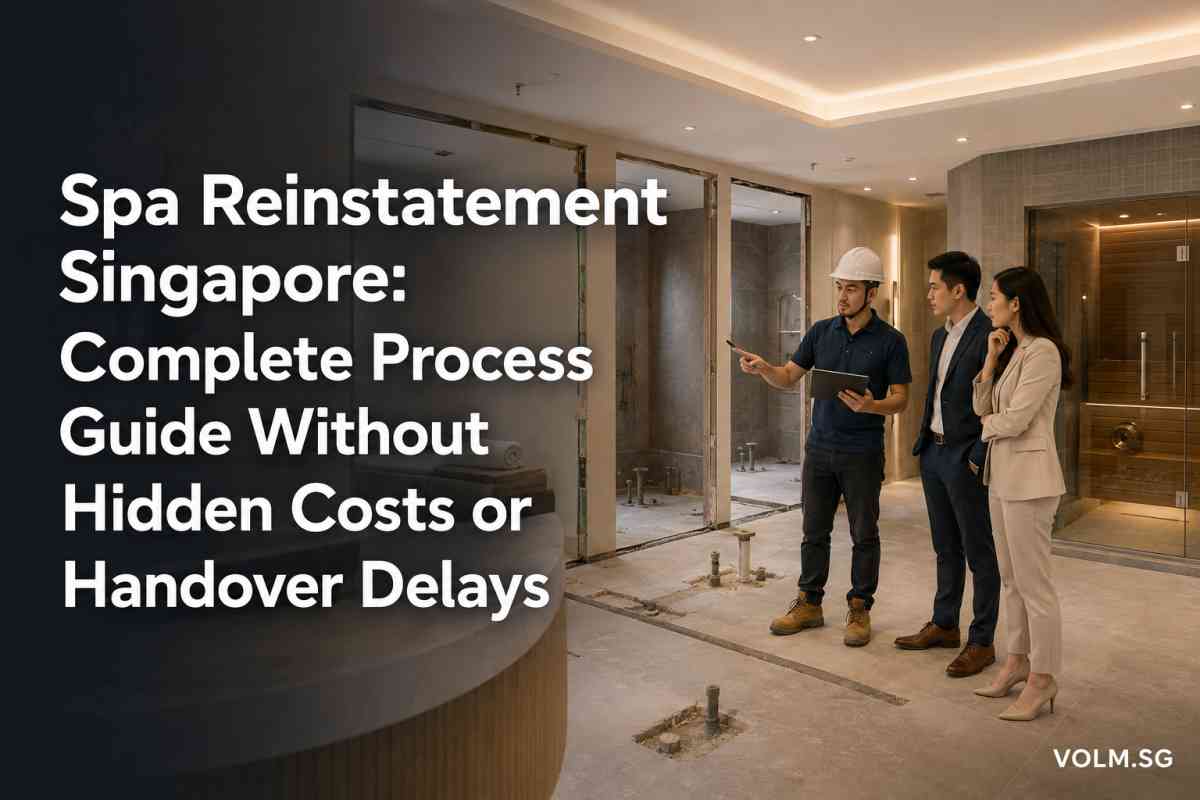
Spa reinstatement is the process of restoring a spa-fitted commercial premises to its original condition at the end of a lease. This involves removing all spa-specific fixtures-steam rooms, saunas, hydrotherapy equipment, treatment room partitions-and restoring plumbing, waterproofing, ventilation and finishes to the base building specification required by the landlord.
If you operate a day spa, wellness centre, or medical aesthetics clinic in a leased commercial space, you almost always need to reinstate the premises when you move out.
The lease agreement determines what must be reinstated to original condition, and for spa premises, the scope is significantly more complex than a typical office reinstatement.
Common concerns include tight lease expiry deadlines, specialised equipment that general contractors may not know how to decommission safely, plumbing complications from steam rooms and wet areas, and the risk of forfeiting your security deposit if the landlord rejects the handover.
Late handovers can incur double rent charges or penalties-a costly mistake that proper planning prevents.
This guide covers the entire process, from site assessment through to final inspection, with clear information on costs, timelines and compliance requirements specific to spa reinstatement in Singapore.
The goal is to give you a clear understanding of what is involved so you can plan effectively, avoid unexpected costs and complete your reinstatement project on schedule.
Standard office reinstatement typically involves removing partition walls, carpet tiles, false ceilings and feature walls, then restoring the space to bare condition.
Spa reinstatement shares the same contractual requirement but demands considerably more technical expertise across several areas:
Spa reinstatement requires compliance with health regulations for public facilities, and reinstating a spa involves mechanical and electrical restoration to meet safety standards-areas that go well beyond removing carpet tiles and repainting walls.
Every reinstatement process begins with understanding the gap between the current state of the premises and what the lease requires at handover.
This is where spa reinstatement diverges most sharply from standard reinstatement works.
Spa reinstatement restores the space to its original layout, so every surface modification must be addressed.
The distinction matters because hiring a contractor without relevant experience is one of the most common mistakes in spa reinstatement projects.
Contractors must have BCA registration and BizSafe Level 3 certification. When evaluating a professional reinstatement contractor, verify their credentials and ask for references from previous spa or clinic reinstatement projects.
To illustrate the complexity involved, consider the scope documented in the Mandarin Oriental Hotel spa renovation-a project covering approximately 375 square metres that included steam room, sauna, changing rooms and full mechanical and electrical services (power, plumbing, fire detection, HVAC).
While that was a fit-out rather than a reinstatement, it demonstrates the breadth of integrated systems that a spa reinstatement must systematically reverse.
In practice, a spa reinstatement project for a mid-sized day spa typically involves:
The final result depends on thorough planning, an experienced team and clear communication with the landlord from the outset. Professional reinstatement ensures the handover date is met and minimises landlord claims against the security deposit.
Spa reinstatement services are relevant to several categories of business operators:
Landlords may require reinstatement when a business moves out of rented space, regardless of whether the lease expires naturally or is terminated early.
Landlords often hold a refundable renovation deposit for reinstatement obligations, and recovering this deposit depends on completing reinstatement works to the agreed standard.
Reinstatement costs range from SGD 25–40 per square foot for standard commercial reinstatement. Spa reinstatement typically sits at the higher end of this range-and often above it-due to the additional complexity of wet areas, specialist equipment removal and waterproofing restoration.
For a spa of approximately 800 square feet with two treatment rooms, a steam room, sauna, wet room and changing area, the following cost breakdown is typical:
| Component | Key Cost Drivers | Estimated Range (SGD) |
|---|---|---|
| Steam room & sauna decommissioning | Licensed trades, equipment weight, venting complexity | $10,000 – $25,000 |
| Waterproofing & floor substrate restoration | Membrane removal, screeding, curing time | $8,000 – $15,000 |
| Ventilation/HVAC reinstatement | Duct sealing, grille restoration, fan removal | $5,000 – $12,000 |
| Ceiling restoration, walls & partitions | Damaged ceiling replacement, patching, repainting | $5,000 – $10,000 |
| Flooring removal & site clearing | Hacking, adhesive removal, concrete repair | $4,000 – $8,000 |
| Permits, licences & documentation | Plumbing licence, SCDF, electrical, landlord approvals | $2,000 – $7,000 |
| Insurance, lift protection & waste disposal | Building management rules, after-hours work surcharges | $1,000 – $5,000 |
| Contingency (10–20%) | Scope overrun, defect rectification | $3,000 – $10,000 |
Total estimated range: S$40,000 to S$90,000 or more, depending on the condition of spa equipment, after-hours waterproofing scope, and specific landlord requirements.
Several logistical factors push costs higher:
These are indicative estimates. Actual costs depend on the scope confirmed during site assessment and landlord negotiations.
Start the reinstatement process 2 to 3 months before the lease ends. For spa premises, this lead time is not generous-it is the minimum recommended to avoid a delayed handover.
| Phase | Duration | Key Activities |
|---|---|---|
| Planning & lease review | 2–3 months before lease expiry date | Scope confirmation, contractor engagement, landlord liaison |
| Permits & approvals | 2–4 weeks | Building management, MCST, plumbing licence, SCDF (if applicable) |
| Equipment decommissioning & removal | 1–3 weeks | Disconnect services, remove spa fixtures, cap off plumbing |
| Surface restoration | 1–2 weeks | Waterproofing removal, screeding, ceiling restoration, repainting |
| Final cleaning & inspection | 1 week | Deep clean, defect rectification, joint inspection, documentation |
A typical reinstatement project takes 4 to 8 weeks to complete on site. The timeline depends on the number of wet areas, the complexity of equipment removal and how quickly permits are secured.
For medium spa spaces (500–1,000 square feet) with multiple wet areas, expect approximately 4–6 weeks of on-site work, with the full project timeline from first planning to handover closer to 8–12 weeks.
Start planning reinstatement at least two months before lease expiry. Starting earlier allows you to save time, negotiate scope with the landlord and secure the right reinstatement contractor before the schedule becomes pressured.
Avoiding these common mistakes can mean the difference between a smooth handover and a reinstatement project that runs over budget and past your lease expiry date.
The most effective strategy is early planning, professional contractor selection and proactive communication with the landlord and building management throughout the reinstatement process.
Spa reinstatement is more complex than standard office or retail reinstatement, but with the right planning and an experienced reinstatement contractor, you can complete it efficiently and within budget.
Start by reviewing your lease requirements, documenting the current state of your premises and engaging a professional reinstatement contractor with relevant spa or clinic experience at least 8–12 weeks before your handover date.
If you are planning a spa reinstatement project, share the following details for an initial consultation and site assessment:
Contact VOLM to discuss your specific requirements and clarify the scope, cost factors, and timeline for your reinstatement project.
Reinstatement typically requires 4 to 8 weeks to complete on site, depending on spa size and the number of wet areas. A medium spa of 500–1,000 square feet with a steam room, sauna and multiple treatment rooms typically needs 4–6 weeks of physical works. Including planning, permits and final inspection, the entire process spans approximately 8–12 weeks. We recommend starting 2–3 months before your lease expires.
Steam generators, hydrotherapy tubs, saunas and treatment beds must be safely decommissioned and removed. Depending on the equipment's age and condition, options include resale, relocation to new premises or disposal as waste. Licensed trades must properly disconnect and cap all utility connections. Common reinstatement work involves removing tenant-installed alterations or fit-outs, and final removal must meet the landlord's specification regardless of the equipment's destination.
Yes. Building management approval is typically required before any reinstatement works begin, and MCST approval can take up to 14 days. PUB regulations require a licensed plumber for any water or sanitary plumbing works. If the work involves steam piping or pressure vessels, MOM approval may be needed. SCDF fire safety approvals may apply where steam rooms or saunas are being removed. We recommend professional contractors to ensure compliance during reinstatement work.
Reinstatement costs range from SGD 25–40 per square foot for standard commercial spaces, but spa reinstatement typically costs more because of wet-area complexity, specialised equipment removal, and waterproofing restoration. For an 800-square-foot spa, total costs may range from S$40,000 to S$90,000 or more. Complex modifications significantly increase reinstatement costs, and the final figure depends on equipment condition, landlord specifications and building management requirements.
Only if the landlord agrees in writing. Some landlords may allow you to retain non-structural elements such as built-in cabinetry, but features like steam rooms fundamentally alter the space and are rarely permitted to remain. Document any departure from full reinstatement in writing to avoid disputes and potential landlord claims against your security deposit. Never assume that the next tenant's plans will exempt you from your contractual obligations.