
close
close
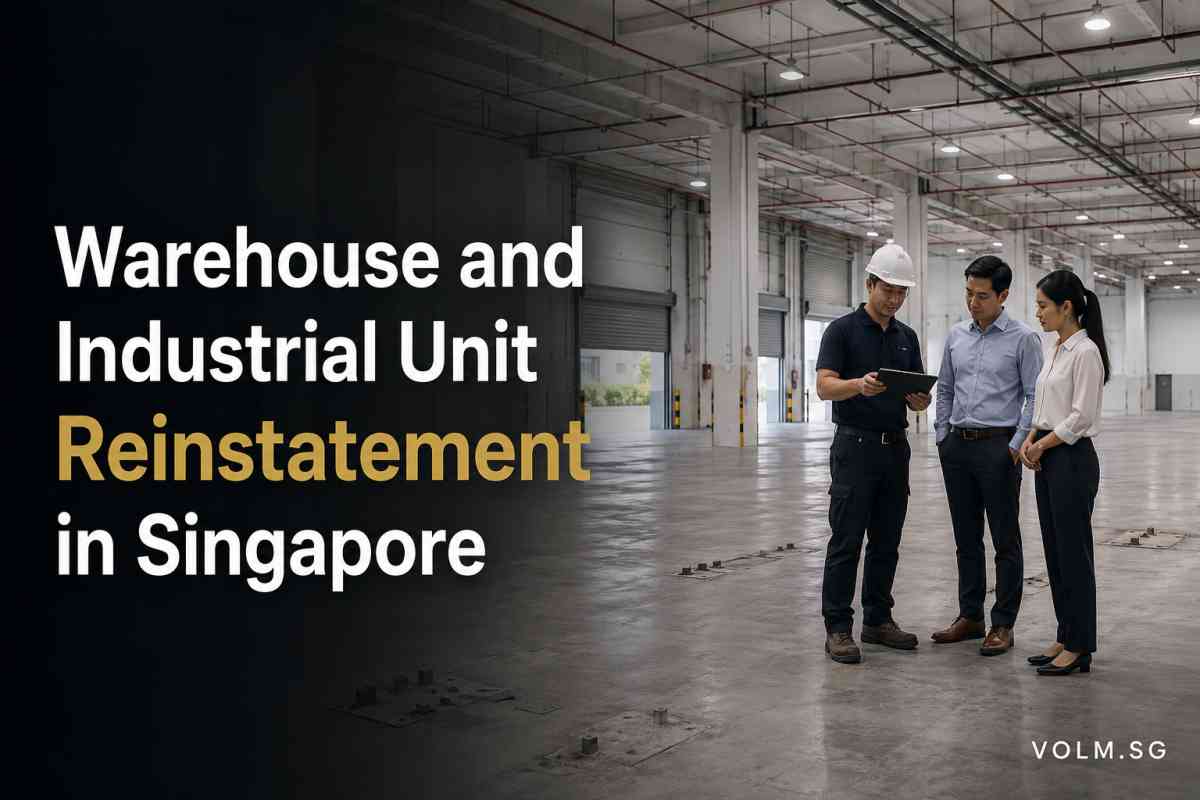
Warehouse reinstatement or industrial unit reinstatement is a critical process for tenants, landlords, and property managers in Singapore. This comprehensive guide covers the entire reinstatement process, including the step-by-step process, key requirements, and common pitfalls to avoid.
Whether you are preparing to vacate a logistics facility, manage a multi-story flatted factory, or oversee a portfolio of industrial properties, understanding reinstatement is essential to ensure lease compliance, protect your security deposit, and control costs.
Reinstatement involves restoring a property to its original condition upon lease expiry, which means removing all tenant-installed fixtures and returning the premises to the baseline state described in the lease agreement.
Failing to meet reinstatement obligations can result in costly penalties, disputes, or loss of deposit. By understanding the process, requirements, and potential challenges, all parties can plan effectively, avoid unnecessary expenses, and ensure a smooth handover at the end of the lease.
This article will walk you through what warehouse and industrial unit reinstatement involves, why it matters, how leases define "original condition," typical reinstatement scopes, timelines, cost factors, and practical steps to follow. We also highlight common pitfalls and answer frequently asked questions, helping you navigate the reinstatement process with confidence.
VOLM manages reinstatement and minor reconfiguration works for warehouses, factories, and light industrial units across Singapore.
Whether you occupy a ground-floor logistics facility or a multi-story flatted factory, the core concern is the same: completing the work on time, protecting your security deposit, and minimising disruption to ongoing operations before you vacate.
Reinstatement is the process of removing tenant works and returning premises to the "original condition" stated in the lease or initial handover records. Reinstatement typically includes removing tenant-installed fixtures and repairs, and it often involves dismantling office partitions and mezzanines added during occupancy.
For Singapore warehouses, the work commonly covers:
"Original condition" usually refers to bare concrete floor, base lighting, essential fire protection, and original loading bay setup, unless otherwise agreed in writing. Requirements differ between ground-floor logistics warehouses, ramp-up warehouses, and flatted factories.
Types of warehouses include storage and distribution centres, while fulfilment centres handle packing and shipping of goods - each with distinct fit-out configurations that influence the reinstatement scope.
Reinstatement sits at the heart of cost control, deposit recovery, and dispute avoidance. Reinstatement works must be completed before lease expiry to avoid penalties - and in JTC-managed properties, tenants may face double rent for overstaying. Timing and planning are crucial in managing the reinstatement process effectively.
For tenants:
For landlords:
Warehouses have served commerce since ancient Rome used horrea as standard warehouse buildings - Galba's horrea complex covered 225,000 square feet, showing how storage evolved in the world of trade.
The first canal warehouse was built in Manchester in 1761, and the first railway warehouse was built in 1830 in Manchester, with later development also taking distinct forms in the UK.
The Industrial Revolution led to specialised warehouses near transport hubs, and forklift trucks were invented in the early 20th century.
Today, the range of possibilities is vast: cold storage warehouses maintain temperatures as low as −25 °C, retail warehouses display finished goods for home trade, and overseas warehouses support cross-border e-commerce logistics. Whatever the type, reinstatement obligations apply when the lease end arrives.
Review the lease reinstatement clause 6–9 months before expiry - this is the single most important step.
Warehouse and industrial leases in Singapore typically define reinstatement obligations across the tenancy agreement, fit-out guidelines, and initial condition report. What counts as "original condition" may reference:
Common clause variations include "reinstate to bare" versus "reinstate to previous tenant's condition." The difference determines whether, say, an existing mezzanine floor must be removed.
Some landlords may allow certain improvements - upgraded LED lighting, epoxy flooring - to remain, but only if documented in writing. Without that page in your agreement, the default expectation is full removal.
If lease language is ambiguous, consult your legal or corporate property team. In HSBC v DNKH Logistics (2023), the court interpreted reinstatement strictly according to what the lease obligated, not what the landlord wished after the fact.
Scope always depends on the existing fit-out, but recurring work items in Singapore warehouses and industrial units fall into clear categories:
Proper waste disposal of materials must be ensured during the reinstatement process.
Industrial reinstatement may involve environmental assessments for hazardous materials - particularly in heavy industrial trades such as plating or food processing, where ammonia used in cold storage is highly toxic and explosive and may require specialist handling.
Wine storage facilities or chemical supply rooms may also need decontamination or deep cleaning.
Timeline depends on floor area, fit-out complexity, building rules, and approval requirements - not just contractor availability. A typical planning horizon for Singapore warehouses:
Physical reinstatement for a 10,000–30,000 sq ft warehouse may take from 2 to 6 weeks, depending on items such as mezzanine removal, heavy M&E strip-out, or complex fire system modification.
Build in buffer time - waiting for inspection slots or touch-up requests from the landlord's person on site can easily add another week.
Reinstatement project costs depend on the size and complexity of the work. VOLM does not quote prices in generic articles, but certain factors consistently drive reinstatement budgets:
Employing licensed contractors is essential for compliance with building management rules.
When comparing quotations, find like-for-like scopes and clarify whether permits, PE fees, after-hours work, and making good of neighbours' areas (if affected) are included. Unclear scope comparisons typically lead to budget overruns mid-project.
This guide outlines a practical, operations-focused process from first assessment to handover:
Most disputes and extra costs come from unclear scope, late planning, and misalignment with building requirements. NIOSH recognises warehousing as a priority industry for safety, and a safety plan should cover all parts of the warehouse during reinstatement work.
All management levels must reinforce safety culture, and regular training ensures employees know fire safety processes throughout the project.
Common pitfalls and how to address them:
Early engagement helps define scope, sequence work alongside ongoing operations, and prepare for landlord inspections without last-minute pressure.
The role VOLM plays is to bring clarity to what needs to happen, what it depends on, and what the realistic programme looks like - so you can use that information to make better decisions about your move-out.
To start a practical, scope-focused conversation about your warehouse or industrial unit reinstatement, share the following with our team:
Contact VOLM for a site walk and a clear, service-oriented discussion about your reinstatement - not a generic quotation, but a conversation that offers you a practical set of next steps.
Some landlords may relax requirements, especially for improvements that add value to the next tenant. However, any agreement to retain fixtures must be documented in writing. Raise this 6–12 months before lease end to allow time for negotiation. Without written consent, the default is full reinstatement - and courts in Singapore enforce lease obligations as written.
Obligations usually relate to the condition you received, not the bare shell. This is why initial photos, schedules of condition, and handover records matter. If the previous tenant's mezzanine was in place when you took the property, your lease may not require its removal - but check the specific clause and any online or www references to landlord fit-out guidelines.
Basic strip-out may not always need new approvals. However, any changes to fire protection systems and means of escape must comply with current SCDF rules. If your fit-out altered sprinkler coverage or exit routes, reinstatement work will likely require plan submissions and certification by a Qualified Person.
Works may be phased by zones and shifts, subject to safety requirements and building rules. This is common in large distribution facilities where the responsible person needs to maintain operations through the transition, especially across cities where the company may be relocating stock to another facility. Reach an agreement with your contractor on clear boundaries between live and work areas.
