
close
close
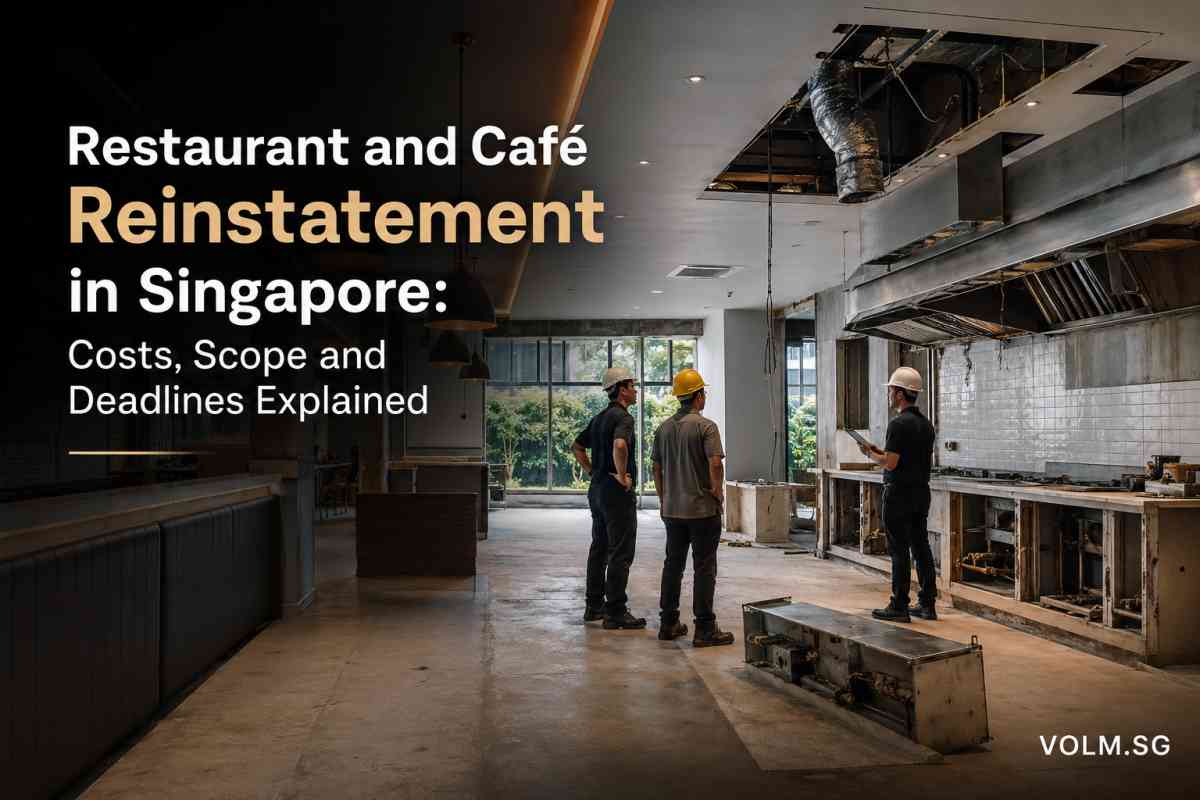
Restaurant & café reinstatement refers to restoring F&B premises in Singapore to their original handover condition before the lease end date. This typically involves removing kitchen equipment, disconnecting gas lines, dismantling exhaust systems, and stripping out all tenant fit-out works.
F&B reinstatement is usually more complex than office reinstatement because landlords, mall management and regulatory requirements often affect how kitchens, exhaust, utilities and disposal works must be handled.
Getting this right matters - failure to complete reinstatement can result in penalties, forfeited deposits and holding-over rent. Starting the reinstatement process 2–3 months before lease expiry, with experienced contractors, helps minimise downtime and hidden costs.
If you operate a restaurant, café or food court stall in Singapore and your lease expires soon, understanding the full reinstatement process early gives you more control over cost factors, timelines and landlord requirements.
This guide explains the scope of restaurant and café reinstatement, what drives cost and timeline, common mistakes, how to choose the right contractor, and the practical checks needed to plan a smooth handover.
VOLM Pte. Ltd. is a Singapore commercial reinstatement contractor that helps F&B tenants clarify scope, coordinate approvals and prepare for a smooth handover - without unnecessary surprises.
In simple terms, reinstatement refers to the contractual obligation to return a leased property to the condition it was in when the landlord first handed it over. For restaurant reinstatement and café reinstatement, this means undoing every modification the tenant made - from the dining area through to the back-of-house kitchen.
Typical reinstatement works include:
F&B reinstatement is usually more complex than office reinstatement because of the heavy mechanical systems, wet plumbing, fire-safety interfaces, and grease management involved. The scope is driven by the tenancy agreement, original handover drawings and any reinstatement schedule issued by mall management or the landlord.
Restaurant reinstatement is mandatory when a lease ends. Most landlords require reinstatement to original condition before handover, and failure to meet this obligation can lead to forfeited security deposits, holding-over rent charges after the lease end date, or the landlord appointing its own contractors at the tenant's expense.
Many tenants underestimate reinstatement time and costs, which creates unnecessary financial pressure during what is already a difficult transition. Clear scope definition early in the exit process reduces variation orders, hidden costs and disputes over what constitutes "original condition."
Whether you are closing a mall food court stall, vacating a café in a CBD office tower, or leaving a Chinatown shophouse restaurant, each scenario carries slightly different landlord expectations. Planning early helps avoid rush fees and penalties, and gives you time to coordinate relocation to a new location if needed.
Standard office reinstatement typically involves carpet removal, demolition of partition walls, removal of false ceilings, and repainting. Office spaces rarely require work on exhaust systems, grease traps or heavy plumbing.
Restaurants and cafés, by contrast, rely on commercial kitchen equipment, higher electrical loads, cold rooms, exhaust and make-up air systems - all of which are often integrated into building infrastructure.
Common tasks include removing kitchen installations and restoring flooring to its original state. The mechanical systems alone can involve fire-rated ductwork, dedicated drainage and waterproofing that must be properly decommissioned.
Additional authority requirements apply to F&B units. These may include obligations under Singapore Food Agency licensing, SCDF fire safety regulations, and gas licensing. This affects the sequencing and coordination of reinstatement projects significantly.
Engaging a professional contractor ensures compliance with building regulations and safety regulations - inexperienced contractors may underestimate the complexity, causing programme slippage or rework demanded by building management.
The scope of restaurant reinstatement services varies by premises, but most commercial lease agreements include requirements covering the following areas:
This is where F&B reinstatement demands particular technical expertise. DIY attempts can result in safety hazards and property damage, so professional contractors should manage these works.
Failing to engage certified professionals leads to compliance issues and potential penalties from authorities.
Beyond the lease agreement itself, restaurant and café reinstatement in Singapore must follow building codes, safety regulations and health requirements.
Common authority interfaces:
Mall and building management requirements typically include submission of method statements, reinstatement drawings, hacking permits, and proof of contractors' insurance.
Food court and mall outlets often face stricter rules on exhaust systems, grease trap cleaning and common-area protection compared with shophouse cafés. Obtain all relevant guidelines and approval forms from mall management as early as possible to avoid bottlenecks.
Restaurant reinstatement costs range from SGD 25–40 per square foot, depending on the scope and complexity. Complex restorations can significantly increase reinstatement costs beyond these indicative ranges.
Labour costs are a significant portion of the reinstatement budget, particularly when restricted working hours apply. Planning early can help avoid rush fees and higher costs.
A professional site survey, review of original handover drawings and current as-built conditions are needed for a realistic estimate. VOLM is transparent about what may change once ceilings and services are opened, and uses provisional sums for uncertain items where appropriate.
Timeline planning must work backwards from your contractual lease end date, including buffer for the final inspection and any snagging.
Reinstatement projects typically take 6–10 weeks to complete. A small café may take a few weeks once approvals are in place; a larger restaurant with extensive services may require several more. Starting reinstatement planning too late leads to complications that are difficult to recover from.
Constraints that extend the programme:
Engage contractors at least 1–2 months before the lease ends, and obtain quotes at least 1–2 months before the lease ends. Ideally, begin discussions with contractors 2–3 months before your planned last trading day so the entire process does not overrun and trigger holding-over charges.
Early preparation is the single most effective way to keep reinstatement on track. Use this checklist as a starting point:
Not communicating early with landlords can cause delays - always confirm scope expectations in writing before works begin.
Many cost overruns and disputes arise from predictable, avoidable issues rather than technical complexity alone.
Choosing a reliable reinstatement contractor directly affects whether your project is completed efficiently, completed safely and on programme. The right contractor reduces risk and delivers predictable timelines.
Questions to ask:
Due diligence steps:
Documentation standards:
VOLM is a Singapore-based fit-out and reinstatement contractor offering comprehensive reinstatement services and reliable reinstatement services for restaurants, cafés, food court stalls and other F&B units.
The focus is on clear scoping, proper coordination with authorities and professional contractors, and professional handover preparation - helping the entire process run as a one-stop reinstatement solution from site assessment through to landlord handover.
As professional reinstatement contractors, VOLM provides reliable reinstatement support across Singapore for tenants who need professional reinstatement services to navigate their lease requirements.
If your lease ends soon and you need clarity on scope, cost factors and timing, VOLM can help you take the first step.
To prepare a structured assessment, share the following:
If available, attach your floor plan, original handover photos, landlord reinstatement checklist or current equipment list. This helps VOLM identify key risk areas and critical-path items early.
VOLM will typically conduct a site walkthrough, highlight the main cost factors and constraints, and outline a realistic timeline - so your reinstatement is completed efficiently, and you achieve a smooth handover without last-minute issues.
Start the reinstatement process 2–3 months before lease expiry. This allows time for site surveys, contractor engagement, permit applications and mall approvals. Most tenants who operate F&B outlets in Singapore find that this lead time is necessary to avoid complications. Obtain quotes at least 1–2 months before your lease ends to properly compare scope and pricing.
Not always. Lease requirements vary - some require return to bare shell, while others may only require removal of tenant-added works. The answer depends on your specific lease agreement and landlord requirements. Review your tenancy agreement and any reinstatement schedule carefully, and confirm expectations in writing with the landlord to achieve full compliance.
Typically, items that were part of the landlord's original handover (such as base building services or landlord-supplied fixtures) should remain. However, any equipment the tenant installed must usually be removed. Check your handover inventory and lease terms. Ambiguity here is a common source of disputes, so written confirmation from the landlord is important for building regulations compliance.
Submit your reinstatement drawings, method statements and contractor details to the mall facilities team as early as possible. Mall management will typically confirm working hours, noise restrictions, loading bay access and common-area protection management requirements. Site inspections by mall staff may be required at various stages before the final inspection and handover.
Yes, many professional contractors who handle reinstatement services also manage commercial renovations and fit-outs. Working with the same firm can help minimise downtime between closing one outlet and opening the next. Communication of the reopening through social media is essential to rebuild customer trust when you move to a new location, and a soft opening helps identify operational bottlenecks before a full reopening.
