volm
volm
volm
volm
August 27, 2026

Restaurant & Café Reinstatement in Singapore: Costs, Scope and Deadlines Explained

Restaurant & Cafe Reinstatement

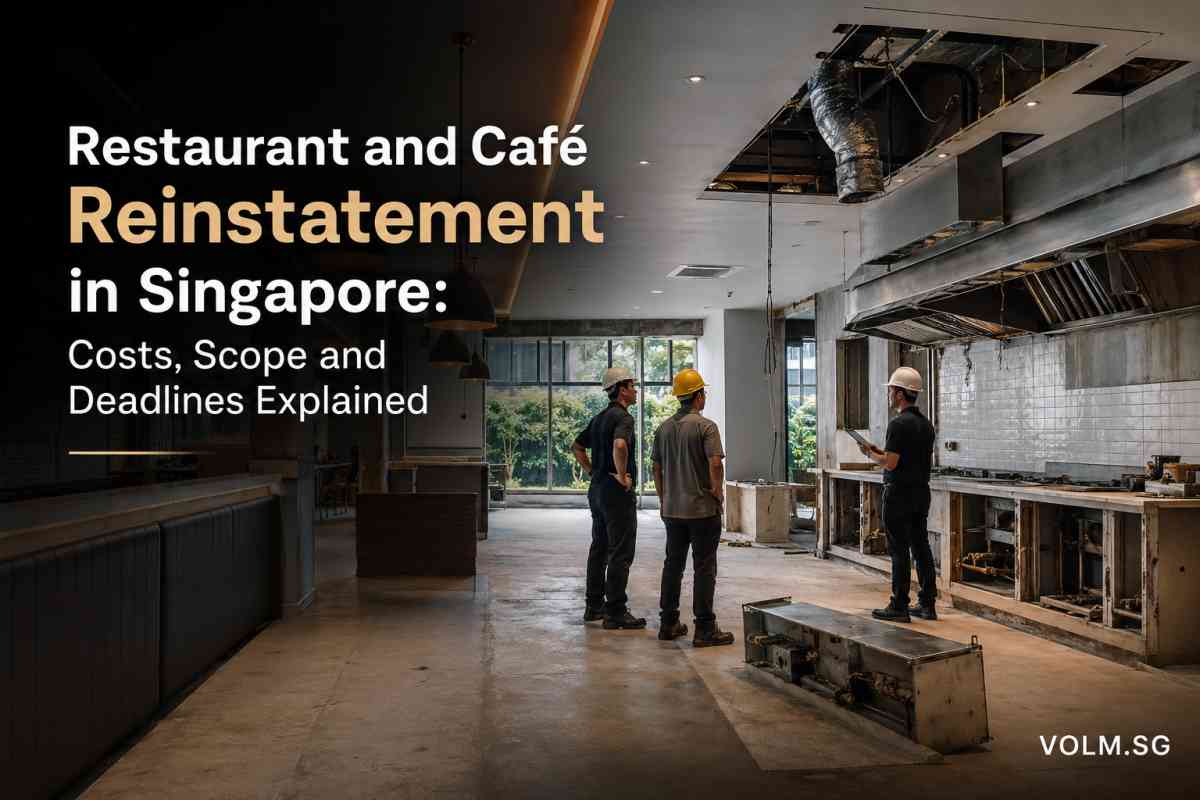
Restaurant & café reinstatement refers to restoring F&B premises in Singapore to their original handover condition before the lease end date. This typically involves removing kitchen equipment, disconnecting gas lines, dismantling exhaust systems, and stripping out all tenant fit-out works. 

F&B reinstatement is usually more complex than office reinstatement because landlords, mall management and regulatory requirements often affect how kitchens, exhaust, utilities and disposal works must be handled.

Getting this right matters - failure to complete reinstatement can result in penalties, forfeited deposits and holding-over rent. Starting the reinstatement process 2–3 months before lease expiry, with experienced contractors, helps minimise downtime and hidden costs. 

If you operate a restaurant, café or food court stall in Singapore and your lease expires soon, understanding the full reinstatement process early gives you more control over cost factors, timelines and landlord requirements.

This guide explains the scope of restaurant and café reinstatement, what drives cost and timeline, common mistakes, how to choose the right contractor, and the practical checks needed to plan a smooth handover. 

VOLM Pte. Ltd. is a Singapore commercial reinstatement contractor that helps F&B tenants clarify scope, coordinate approvals and prepare for a smooth handover - without unnecessary surprises.

What is restaurant & café reinstatement in Singapore?

In simple terms, reinstatement refers to the contractual obligation to return a leased property to the condition it was in when the landlord first handed it over. For restaurant reinstatement and café reinstatement, this means undoing every modification the tenant made - from the dining area through to the back-of-house kitchen.

Typical reinstatement works include:

  • Kitchen equipment removal (cooklines, ovens, dishwashers, cold rooms)

  • Disconnection and decommissioning of gas lines

  • Removal of exhaust systems, grease traps and ventilation ducting

  • Stripping out partition walls, false ceilings, built-in furniture and floor finishes

  • Restoring flooring, wall restoration, repainting and final cleaning

F&B reinstatement is usually more complex than office reinstatement because of the heavy mechanical systems, wet plumbing, fire-safety interfaces, and grease management involved. The scope is driven by the tenancy agreement, original handover drawings and any reinstatement schedule issued by mall management or the landlord.

Why does reinstatement matter for restaurant and café tenants?

Restaurant reinstatement is mandatory when a lease ends. Most landlords require reinstatement to original condition before handover, and failure to meet this obligation can lead to forfeited security deposits, holding-over rent charges after the lease end date, or the landlord appointing its own contractors at the tenant's expense.

Many tenants underestimate reinstatement time and costs, which creates unnecessary financial pressure during what is already a difficult transition. Clear scope definition early in the exit process reduces variation orders, hidden costs and disputes over what constitutes "original condition."

Whether you are closing a mall food court stall, vacating a café in a CBD office tower, or leaving a Chinatown shophouse restaurant, each scenario carries slightly different landlord expectations. Planning early helps avoid rush fees and penalties, and gives you time to coordinate relocation to a new location if needed.

Why is F&B reinstatement more complex than office reinstatement?

Standard office reinstatement typically involves carpet removal, demolition of partition walls, removal of false ceilings, and repainting. Office spaces rarely require work on exhaust systems, grease traps or heavy plumbing.

Restaurants and cafés, by contrast, rely on commercial kitchen equipment, higher electrical loads, cold rooms, exhaust and make-up air systems - all of which are often integrated into building infrastructure.

Common tasks include removing kitchen installations and restoring flooring to its original state. The mechanical systems alone can involve fire-rated ductwork, dedicated drainage and waterproofing that must be properly decommissioned.

Additional authority requirements apply to F&B units. These may include obligations under Singapore Food Agency licensing, SCDF fire safety regulations, and gas licensing. This affects the sequencing and coordination of reinstatement projects significantly.

Engaging a professional contractor ensures compliance with building regulations and safety regulations - inexperienced contractors may underestimate the complexity, causing programme slippage or rework demanded by building management.

What are the main scope items in restaurant and café reinstatement?

The scope of restaurant reinstatement services varies by premises, but most commercial lease agreements include requirements covering the following areas:

Demolition and strip-out:

  • Removal of partitions, counters, feature walls, bulkheads, ceiling systems and floor finishes

  • Stripping out built-in furniture in both dining areas and back-of-house

  • Removing installed fixtures such as display shelving, signage brackets and decorative elements

Kitchen equipment removal:

  • Cooklines, ovens, fryers, dishwashers, refrigeration units, coffee machines and undercounter cabinets

  • Safe isolation of electrical wiring, water and drainage connections before removal

Services and M&E:

  • Power points, lighting, DB board additions and data cabling

  • Plumbing lines (sinks, floor traps, hot water systems)

  • Air-conditioning diffusers or fan-coil units that need to be removed, reset or made good

Finishing works:

  • Tiling repairs, wall patching and repainting in the landlord's specified colour

  • Replacement of damaged doors, hardware or ceiling grid components

  • Site cleaning and proper disposal of all debris

How are kitchen equipment, gas lines and ventilation safely removed?

This is where F&B reinstatement demands particular technical expertise. DIY attempts can result in safety hazards and property damage, so professional contractors should manage these works.

Kitchen equipment removal:

  • Tag and inventory all items, noting which will be relocated, sold or scrapped

  • Isolate electrical feeds at the distribution board before disconnecting equipment

  • Disconnect water supply and drainage lines, capping open ends

  • Protect floor finishes during heavy lifts, and coordinate loading bay access with mall management for removal

Gas lines:

  • Licensed gas service workers must shut off supply, decommission piping and cap all points

  • Documentation may be required by the landlord or gas supplier confirming safe disconnection

  • Improper removal of gas lines creates serious safety and legal issues

Mechanical and ventilation systems:

  • Dismantle hoods, ducts, fan-coil units and fire dampers

  • Coordinate with building mechanical systems to avoid disrupting adjacent tenants

  • Seal all penetrations in fire-rated walls and ceilings to maintain compartmentation

Safety and compliance:

  • Lock-out/tag-out procedures for all electrical and gas isolations

  • Hot-work permits where cutting or welding is required

  • Strict compliance with mall management requirements on working hours, noise control and waste disposal

Failing to engage certified professionals leads to compliance issues and potential penalties from authorities.

Regulatory, authority and mall management requirements

Beyond the lease agreement itself, restaurant and café reinstatement in Singapore must follow building codes, safety regulations and health requirements.

Common authority interfaces:

  • SCDF oversees fire protection systems. Reinstatement works affecting fire-rated walls, sprinklers, detectors or exhaust ducts crossing fire compartments require proper coordination and may need permits or inspections.

  • BCA may be involved where hacking or structural openings are part of the reinstatement scope.

  • SFA manages food premises licensing. While de-licensing and physical reinstatement are separate steps, tenants should note that food safety standards must be met to avoid license suspension.

    Under SFA guidelines, a suspension may occur due to accumulating 12 or more demerit points, and it is unlawful to operate a restaurant with a suspended or revoked license. Reinstating a restaurant or café license after suspension requires addressing compliance failures, and fines must be paid before a suspended license is reinstated.

    Food hygiene officers and food handlers may be required to pass relevant food safety courses after a suspension, and operators typically need to pass follow-up inspections before resuming operations. Revoked licenses usually require submission of a new application rather than reinstatement.

    All health permits and business licenses must be active and up to date before reopening operations. Ensure proper infrastructure meets regulatory compliance to reinstate a restaurant license.

Mall and building management requirements typically include submission of method statements, reinstatement drawings, hacking permits, and proof of contractors' insurance. 

Food court and mall outlets often face stricter rules on exhaust systems, grease trap cleaning and common-area protection compared with shophouse cafés. Obtain all relevant guidelines and approval forms from mall management as early as possible to avoid bottlenecks.

What drives restaurant and café reinstatement cost in Singapore?

Restaurant reinstatement costs range from SGD 25–40 per square foot, depending on the scope and complexity. Complex restorations can significantly increase reinstatement costs beyond these indicative ranges.

Key cost factors include:

  • Floor area - a 300 sqft kiosk versus a 2,500 sqft restaurant represents a very different scale of work

  • Intensity of fit-out and amount of commercial kitchen equipment to remove

  • Number of gas lines, complexity of exhaust routing, and grease trap configurations

  • Condition of existing finishes and whether originals are discontinued or hard to match

Building-specific requirements that add cost:

  • Limited working hours (night-only hacking in malls)

  • Mandatory protection of common corridors and lobbies

  • Landlord-specified finishing standards for wall restoration, restoring flooring and repainting

Hidden costs to budget for:

  • Waste disposal and bin-centre charges

  • Reinstatement of core services (sprinklers, FCUs)

  • Pest-control treatments

  • After-hours work premiums

  • Variation orders from undocumented previous works

Labour costs are a significant portion of the reinstatement budget, particularly when restricted working hours apply. Planning early can help avoid rush fees and higher costs. 

A professional site survey, review of original handover drawings and current as-built conditions are needed for a realistic estimate. VOLM is transparent about what may change once ceilings and services are opened, and uses provisional sums for uncertain items where appropriate.

How long does F&B reinstatement usually take, and how to align with lease end date?

Timeline planning must work backwards from your contractual lease end date, including buffer for the final inspection and any snagging.

Typical sequencing:

  1. Pre-survey and quotation

  2. Scope confirmation and reinstatement drawings

  3. Building management and mall approvals, plus necessary permits

  4. Demolition, services isolation and kitchen equipment removal

  5. Making good (walls, ceilings, floors, M&E)

  6. Testing, site cleaning and final walkthroughs

  7. Formal handover

Reinstatement projects typically take 6–10 weeks to complete. A small café may take a few weeks once approvals are in place; a larger restaurant with extensive services may require several more. Starting reinstatement planning too late leads to complications that are difficult to recover from.

Constraints that extend the programme:

  • Restricted noisy-work hours in malls

  • Shared loading bay slots and service lift scheduling

  • Authority inspection lead times

  • Late clarification of landlord requirements

Engage contractors at least 1–2 months before the lease ends, and obtain quotes at least 1–2 months before the lease ends. Ideally, begin discussions with contractors 2–3 months before your planned last trading day so the entire process does not overrun and trigger holding-over charges.

Practical checklist to minimise downtime and surprises

Early preparation is the single most effective way to keep reinstatement on track. Use this checklist as a starting point:

Lease and scope review:

  • Review lease reinstatement clauses, lease terms and original handover documents

  • Confirm the lease end date and any required reinstatement inspection date

  • Clarify expectations with the landlord or mall management in writing

Planning and documentation:

  • Compile a kitchen equipment list; mark items to sell, relocate or scrap

  • Obtain as-built drawings if available

  • Photograph existing conditions before starting any reinstatement works

  • Confirm lease obligations around proper disposal of waste and debris

Coordination tasks:

  • Schedule your last trading day, fridge and stock clearance

  • Arrange utility account closure dates

  • Book shared facilities (service lifts, bin centres) with building management

  • Ensure proper coordination between your team, contractor and mall facilities

Quality control:

  • Conduct a joint inspection with the contractor before the landlord viewing

  • Keep records of all permits, approvals and completion photos

  • Ensure keys and access cards are ready for formal handover

Not communicating early with landlords can cause delays - always confirm scope expectations in writing before works begin.

Common reinstatement mistakes F&B tenants make (and how to avoid them)

Many cost overruns and disputes arise from predictable, avoidable issues rather than technical complexity alone.

Planning mistakes:

  • Starting planning too late, leaving insufficient time for approvals and execution

  • Assuming office reinstatement cost benchmarks apply to F&B - they rarely do

  • Not reading detailed reinstatement clauses in the lease agreement

  • Relying on informal verbal agreements about what can stay in the premises

Technical pitfalls:

  • Unauthorised disconnection of gas lines or fire systems

  • Hacking without permits from building management

  • Leaving exhaust penetrations unsealed after duct removal

  • Failing to restore original sprinkler and detector layouts

Financial oversights:

  • Ignoring waste disposal charges and proper disposal requirements

  • Not budgeting for night work premiums in malls

  • Underestimating the cost of matching tiles or finishes when originals are discontinued

  • Hidden costs may include waste disposal and pest control fees that were not anticipated

Practical mitigations:

  • Engage experienced contractors with F&B-specific track records

  • Obtain written confirmations from the landlord on scope expectations

  • Conduct staged site inspections during the reinstatement process

  • Keep a contingency allowance for concealed conditions discovered after ceiling or wall opening

How to choose an experienced restaurant and café reinstatement contractor

Choosing a reliable reinstatement contractor directly affects whether your project is completed efficiently, completed safely and on programme. The right contractor reduces risk and delivers predictable timelines.

Questions to ask:

  • Do you have experience with F&B reinstatement in malls, food courts, and shophouses?

  • How do you handle kitchen equipment removal for large commercial kitchens?

  • Are you familiar with authority requirements from SCDF and SFA?

  • Can you coordinate directly with mall management or building facilities teams?

  • Ask contractors about their compliance with SFA and SCDF regulations specifically

Due diligence steps:

  • Review previous F&B reinstatement projects completed by contractors - request photos, scope summaries and references

  • Ask for sample method statements and programme outlines

  • Choose contractors familiar with mall management requirements and restricted working-hour logistics

  • Engage contractors with experience in F&B reinstatement, not just general commercial renovations

Documentation standards:

  • Look for itemised scope documents with clear exclusions

  • Provisional sums should be identified for uncertain items

  • Defined communication channels during the project reduce misunderstandings and variation orders

VOLM is a Singapore-based fit-out and reinstatement contractor offering comprehensive reinstatement services and reliable reinstatement services for restaurants, cafés, food court stalls and other F&B units. 

The focus is on clear scoping, proper coordination with authorities and professional contractors, and professional handover preparation - helping the entire process run as a one-stop reinstatement solution from site assessment through to landlord handover. 

As professional reinstatement contractors, VOLM provides reliable reinstatement support across Singapore for tenants who need professional reinstatement services to navigate their lease requirements.

Next steps: share your F&B unit details for a reinstatement assessment

If your lease ends soon and you need clarity on scope, cost factors and timing, VOLM can help you take the first step.

To prepare a structured assessment, share the following:

  • Premises type: restaurant, café, food court stall or kiosk

  • Approximate size in square feet

  • Location: mall name, office tower or shophouse address

  • Current lease end date and your desired last trading day

If available, attach your floor plan, original handover photos, landlord reinstatement checklist or current equipment list. This helps VOLM identify key risk areas and critical-path items early.

VOLM will typically conduct a site walkthrough, highlight the main cost factors and constraints, and outline a realistic timeline - so your reinstatement is completed efficiently, and you achieve a smooth handover without last-minute issues.

FAQs

When should I start planning reinstatement before my lease expires?

Start the reinstatement process 2–3 months before lease expiry. This allows time for site surveys, contractor engagement, permit applications and mall approvals. Most tenants who operate F&B outlets in Singapore find that this lead time is necessary to avoid complications. Obtain quotes at least 1–2 months before your lease ends to properly compare scope and pricing.

Is full bare-unit reinstatement always required?

Not always. Lease requirements vary - some require return to bare shell, while others may only require removal of tenant-added works. The answer depends on your specific lease agreement and landlord requirements. Review your tenancy agreement and any reinstatement schedule carefully, and confirm expectations in writing with the landlord to achieve full compliance.

Can tenants keep landlord-installed kitchen equipment in place?

Typically, items that were part of the landlord's original handover (such as base building services or landlord-supplied fixtures) should remain. However, any equipment the tenant installed must usually be removed. Check your handover inventory and lease terms. Ambiguity here is a common source of disputes, so written confirmation from the landlord is important for building regulations compliance.

How do I handle mall management approvals for reinstatement?

Submit your reinstatement drawings, method statements and contractor details to the mall facilities team as early as possible. Mall management will typically confirm working hours, noise restrictions, loading bay access and common-area protection management requirements. Site inspections by mall staff may be required at various stages before the final inspection and handover.

Can the same contractor manage both reinstatement and fit-out at a future site?

Yes, many professional contractors who handle reinstatement services also manage commercial renovations and fit-outs. Working with the same firm can help minimise downtime between closing one outlet and opening the next. Communication of the reopening through social media is essential to rebuild customer trust when you move to a new location, and a soft opening helps identify operational bottlenecks before a full reopening.

Lease ending soon? Learn restaurant and café reinstatement costs, scope, deadlines and common mistakes before they cost you more.
Article written by VOLM

Leave a Reply

Your email address will not be published. Required fields are marked *

volm
volm

Got A Project In Mind?

Send us a brief overview and we will be in touch in 24 hours.

REINVENTING SPACES
© 2026 VOLM PTE. LTD. 
202212483Z 
CHAT WITH US
envelopephonemap-markermagnifiercrossmenuchevron-down linkedin facebook pinterest youtube rss twitter instagram facebook-blank rss-blank linkedin-blank pinterest youtube twitter instagram