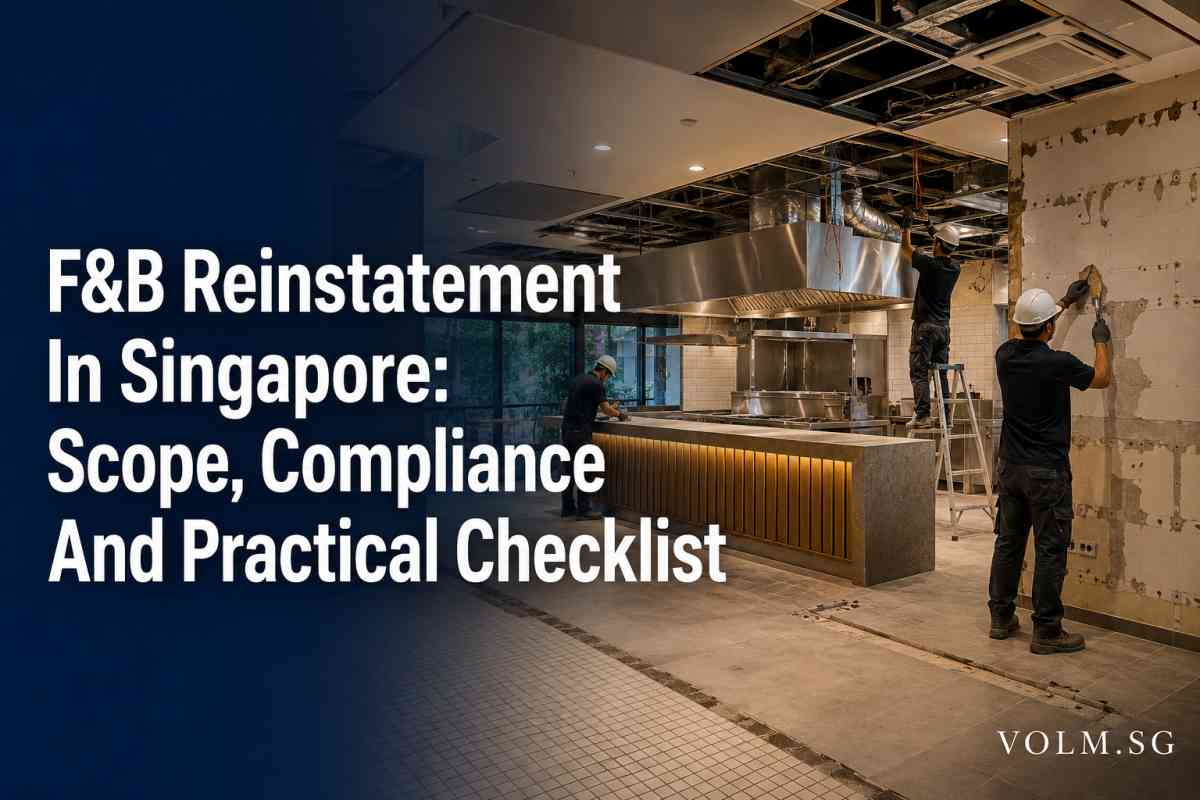
F&B reinstatement refers to restoring restaurants, cafés, kiosks and food court stalls to their original handover condition before lease expiry - usually a bare unit condition as defined in the tenancy agreement. It is a contractual obligation of tenants upon lease expiry or termination.
This reinstatement process typically includes dismantling kitchen equipment and restoring flooring, removing furniture, false ceilings, partitions and signage, and making good all surfaces. F&B reinstatement restores units to original handover condition so the landlord can re-let without additional remedial work.
Proper reinstatement helps tenants avoid disputes over landlord compliance, deductions from the security deposit, and delays to the handover date. VOLM supports F&B and office tenants in Singapore with clear scope planning, coordination with mall management and authorities, and practical project scheduling.
Unlike standard office reinstatement - which focuses mainly on removing partitions, carpet and workstations - F&B reinstatement is substantially more complex. It involves gas lines, grease traps, exhaust systems, wet-area plumbing and heavier regulatory oversight, all of which demand specialist technical expertise and careful sequencing.
Why F&B Reinstatement Matters for Singapore Tenants and Landlords
Most commercial lease agreements in Singapore - whether for malls, food courts or shophouses - include a clause requiring the tenant to return the premises to their original condition. This lease obligation is typically spelt out as returning the unit to "bare shell" or the layout documented at handover.
The reinstatement of F&B establishments can result from reasons like lease expiration, business closure, or regulatory compliance - but in every case, the lease agreement governs what must be done.
Failure to complete reinstatement properly can result in financial consequences for the tenant, including forfeited deposits, overstay charges and additional rectification costs. Business interruption due to reinstatement can significantly affect revenue generation, especially when works drag past the point where the lease ends.
Key impacts for both parties:
- F&B units often carry higher security deposits than office spaces, making reinstatement financially significant.
- Landlords and building management protect fire safety, mechanical systems and the building's infrastructure through strict reinstatement standards. Most landlords require a Fire Safety Certificate before handover.
- F&B units must comply with strict health and safety regulations, and reinstatement can be mandated due to unapproved modifications to a commercial space.
- Poor reinstatement can damage a tenant's reputation with large landlords, affecting future lease negotiations.
- Landlords need a compliant handover to facilitate the next tenant's fit-out approvals without delay.
F&B vs Office Reinstatement: What's Different?
Office reinstatement typically involves removing partitions, workstations, carpet, false ceilings and standard lighting to return the space to a basic, lettable condition. Office spaces generally have lighter M&E requirements and fewer shared wet zones.
F&B reinstatement includes all of the above plus complex kitchen infrastructure: cold rooms, floor drains, exhaust ducts, grease management systems and heavy-duty cooking equipment. F&B reinstatement involves complex systems like plumbing and gas lines that require careful disconnection. Specialised licensed contractors are often required to handle mechanical and electrical systems during reinstatement, particularly gas isolation and fire-rated ductwork.
Reinstatement projects often require more time and higher costs than office reinstatement because of these additional layers:
- Heavier electrical loads and dedicated distribution boards
- More stringent authority requirements from SCDF (fire safety), SFA (food licensing) and BCA (building control)
- Tighter noise controls and restricted access windows in malls and food courts, which affect scheduling
- Wet-area waterproofing and drainage that must be properly reinstated
VOLM plans both office and F&B reinstatement scopes together for clients managing an office move alongside restaurant reinstatement or portfolio restructuring, helping coordinate costs and align dates across projects.
Key Elements of F&B Reinstatement Scope in Singapore
The scope of F&B reinstatement works varies by outlet type and lease requirements, but typically includes the following:
- Kitchen equipment removal: Cooking ranges, ovens, fryers, dishwashers, chillers, freezers, coffee machines and stainless-steel counters. Removing kitchen equipment requires skilled technicians for safety, including safely shutting off gas and water supply lines and protecting the landlord's fixed infrastructure. This may involve removing kitchen exhaust systems and heavy-duty stoves.
- Exhaust hoods, ducting and filters: Dismantling of extraction systems, including horizontal and vertical duct runs. Where these connect to shared building mechanical systems or risers, coordination is needed so fans and neighbouring connections are not damaged. Exhaust ducts running outside food courts must typically have at least a 1-hour fire resistance rating per SCDF requirements.
- Gas line works: Isolation, capping and removal of tenant-installed gas piping, carried out by licensed gas service workers following local safety regulations. Gas supply points are left capped or removed as specified.
- Plumbing, drainage and grease traps: Removal or modification of sinks, floor traps and grease traps where tenant-installed. Grease trap cleaning and proper disposal are essential before handover. Original pipe routes may need reinstatement depending on the lease.
- Partitions, ceilings and finishes: Hacking and removing partitions, bulkheads, false ceilings, floor tiles and wall restoration to bring the unit back to original finishes or bare slab. This includes restoring flooring in wet and dry zones.
- Electrical and data reinstatement: Removal of additional power points, DB board modifications, low-voltage cabling and decorative lighting. Electrical wiring is returned to original arrangements per as-built drawings.
- Final finishing and cleaning: Repainting in landlord-specified colours, repairing penetrations, signage removal, and final cleaning - including degreasing of surfaces and site cleaning ready for joint inspection.
Different outlet types bring different demands. Restaurants require extensive dismantling and debris removal. Cafés often involve careful dismantling of custom-built furniture. Food court stalls must comply with strict mall management regulations. Kiosks require complete dismantling of the entire structure. Takeaway outlets involve removing fixtures to restore bare conditions.
Landlord, Mall Management and Authority Requirements
Reinstatement in a mall or commercial building is governed not only by the lease but also by building management requirements and external authorities. Tenants should anticipate these early to avoid delays.
- Major malls and commercial landlords in Singapore issue detailed reinstatement guidelines covering permitted working hours, noise limits, hoarding requirements and protection of lift lobbies and common corridors.
- Mall management may require work method statements, risk assessments and public-liability insurance certificates from reinstatement contractors before approving mobilisation. Professional reinstatement contractors familiar with these processes can help avoid rejected submissions.
- A joint inspection with the landlord or mall representatives - before and after reinstatement - is standard practice. Many landlords use a formal Joint Inspection Clearance Form to record condition and any rectification items.
- The process involves inspection for compliance with building codes and safety standards. Typical authority touchpoints include SCDF for fire-protection works, BCA for structural issues under building regulations, and SFA for closure or amendment of F&B licences. Reinstatement may require rectifying food safety and hygiene issues after compliance orders. The reinstatement process requires permits to be obtained before demolition work begins.
- All waste disposal and debris removal must follow NEA-related requirements and building rules, including proper disposal of grease, cooking oil and construction waste via licensed channels, with appropriate use of service lifts.
- Restoration involves ensuring full compliance with existing health and food safety regulations before the space is formally handed over.
VOLM helps clients interpret landlord checklists, sequence approvals and incorporate regulatory lead times into the programme so that the final inspection and lease handover proceed without last-minute surprises.
Planning Timeline, Budget and Risk for F&B Reinstatement
Early preparation makes a measurable difference. Tenants should engage a reliable reinstatement contractor two to three months before lease expiry for restaurant-scale units, and earlier for complex multi-outlet or food court setups. You should obtain quotes at least one to two months before the lease ends to allow time for scope confirmation and scheduling.
F&B reinstatement often takes several weeks to complete. A small kiosk or takeaway under 500 sqft might need 10–14 days; a mid-sized restaurant of 3,000–4,000 sqft with a full commercial kitchen typically requires three to four weeks of reinstatement works, plus additional time for approvals, site inspections and re-inspections.
F&B reinstatement should start two to four weeks before lease expiry for the physical works, but planning must begin much earlier.
Major cost drivers include:
- Unit size and ceiling height
- Intensity of fit-out: number of gas lines, exhaust runs, partitions and wet areas
- After-hours or weekend working required by mall management (night-work surcharges can add 30–50%)
- Material reinstatement such as tiling, ceiling finishes and wall restoration
- Late changes from landlords or building management
F&B reinstatement typically costs SGD 25–40 per square foot. Restaurant reinstatement costs range from SGD 25–40 per square foot for typical scopes. Complex restorations significantly increase reinstatement costs - premium mall units with high-end finishes may cost more. Hidden costs may include waste disposal and pest control fees, which should be clarified in any reinstatement quote. Poor planning can lead to rush fees and penalties during reinstatement.
Accurate budgets require a site assessment, review of existing drawings and the landlord's reinstatement schedule.
Risks that affect the final cost and timeline include hidden services inside walls or ceilings, undocumented modifications by previous tenants, and late design clarifications from building management. VOLM provides itemised scopes and clarifies assumptions so clients understand where variations may arise.
Step-by-Step F&B Reinstatement Process with VOLM
The entire process from first enquiry to landlord handover follows a structured sequence. The reinstatement process may involve deeper cleaning and structural repairs to meet standards, depending on how the unit was used.
- Initial discussion: The client shares outlet type (e.g. café, bar, food court stall), location, approximate size, lease expiry date, lease requirements and any landlord reinstatement guidelines or handover checklists already received.
- Site assessment: VOLM conducts a walkthrough to document existing fit-out, kitchen equipment, gas and plumbing layouts, false ceilings, signage and surrounding common areas that need protection during works.
- Scope definition and proposal: An itemised reinstatement scope is prepared, aligned with landlord requirements and authority requirements. Assumptions about hidden services, debris removal methods, and proper coordination with authorities are clearly flagged.
- Coordination and permits: Building management applications, access cards and lift bookings are arranged. Where required, VOLM coordinates with licensed specialists for gas isolation, fire protection or SCDF-related works. Reinstatement is intended to ensure that operational issues are addressed before the space can be handed back.
- Execution: Dismantling is sequenced - kitchen equipment first, then M&E disconnections, hacking, surface reinstatement and painting - to minimise noise impact and protect adjacent tenants. Works are completed safely and completed efficiently within the agreed programme.
- Quality checks and rectification: Internal inspections confirm walls, floors, ceilings and services match the agreed reinstatement condition. Any fine-tuning is done before the landlord's final inspection.
- Joint inspection and handover: VOLM accompanies or supports the client during the landlord or mall management inspection, responds to reasonable rectification requests, and prepares documentation of completed works. The goal is a smooth handover with proper documentation, including proof of proper disposal, permits and as-built photos.
Common Mistakes in F&B Reinstatement – And How to Reduce Them
- Late planning: Leaving reinstatement until the last few weeks before the lease ends limits contractor availability and often triggers after-hours surcharges and overstay penalties. Start discussions two to three months in advance.
- Using office pricing assumptions: Assuming office reinstatement rates apply to F&B leads to budget shortfalls. Reinstatement projects in F&B involve kitchen equipment, exhaust and gas works that office spaces simply do not have. Obtain an F&B-specific quotation after a site assessment.
- Overlooking lease and reinstatement schedule details: Not reviewing the tenancy agreement and landlord reinstatement schedule in detail can mean missed items - grease trap cleaning, specific paint colours, replacement of original tiles or improper removal of fixtures. Review the lease early with your contractor.
- Using unfamiliar contractors: Reinstatement contractors unfamiliar with mall management rules risk rejected method statements, noisy works during restricted hours, or damage to common areas. Engage contractors with experience in F&B reinstatement projects and ask about their experience with SCDF and SFA regulations. Professional contractors ensure strict compliance with safety regulations.
- Poor documentation of original condition: Without photos, drawings and inventories from the original handover, it is difficult to agree what "original" means at lease end. Document everything at takeover and keep fit-out approval records.
- Skipping permits and authority checks: Choose contractors who handle necessary permits and documentation. Professional reinstatement services from experienced contractors like VOLM, who have a proven track record in commercial and F&B environments and who operate regularly in Singapore, help reduce these risks through clearer scope, realistic scheduling and better stakeholder communication.
Ready to discuss your F&B reinstatement?
Contact VOLM with your premises type (restaurant, café, kiosk or food court stall), approximate size in square feet, building name, target handover date, and any landlord reinstatement checklist or floor plan you already have. Getting clarity on scope and cost early gives you more control over the process - and fewer surprises at handover.
FAQs
When should I start planning F&B reinstatement?
Start discussions two to three months before lease expiry, earlier for large restaurants, warehouse reinstatement or multiple units. This gives time to secure approvals, align with the landlord's reinstatement schedule and manage reinstatement works without rush premiums or penalties.
Can I keep some of my fit-out for the next tenant instead of full reinstatement?
This depends on landlord acceptance and a written variation to the lease agreement. Some landlords accept partial shop reinstatement where incoming tenants may reuse infrastructure. Confirm decisions in writing before reducing scope to protect your deposit position.
Does reinstatement guarantee full return of my security deposit?
Good professional reinstatement reduces issues at the final inspection, but deposit decisions rest with the landlord and may include other lease factors such as rent arrears or damage beyond reinstatement scope.
Can one contractor handle both my old restaurant reinstatement and new office fit-out?
Multi-scope professional reinstatement contractors like VOLM can coordinate both, which may simplify planning and align timelines. This works well when managing an office move alongside closing an F&B outlet, subject to workload and project fit.
