
close
close
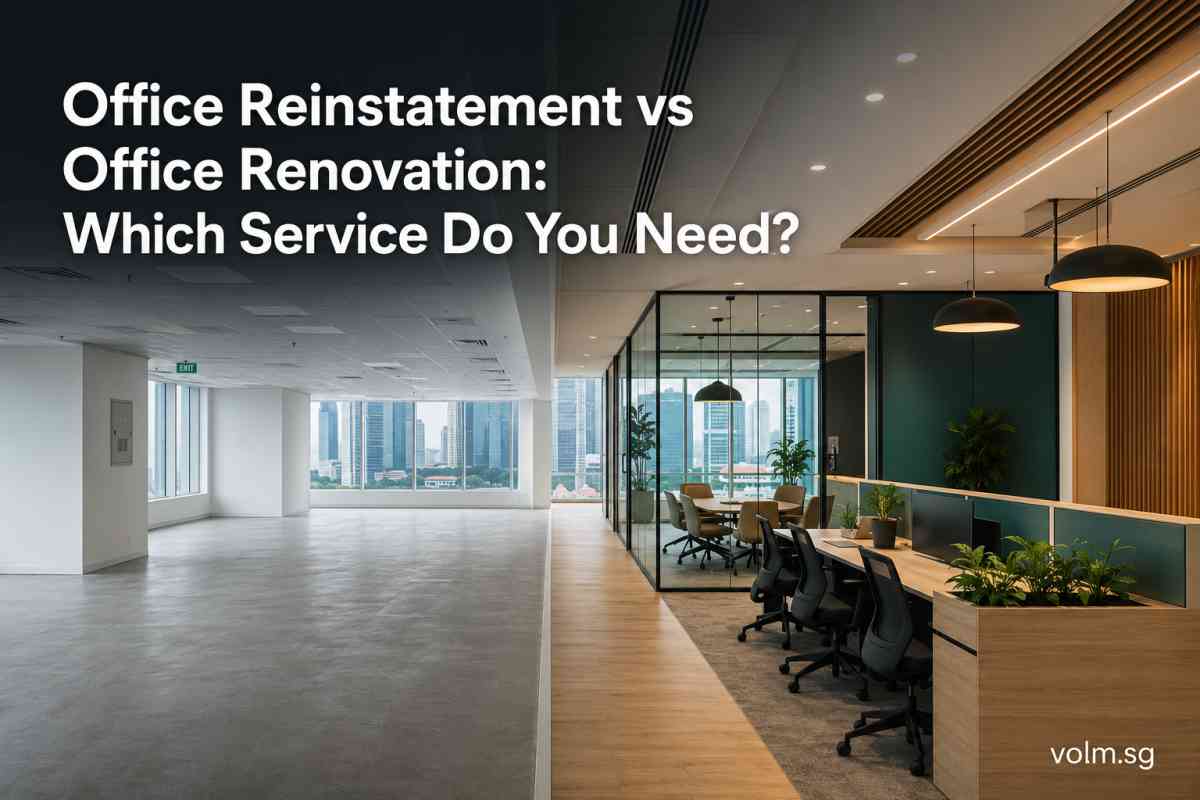
An office reinstatement checklist is a structured list of works, approvals and inspections needed to return a leased commercial premises to the condition defined in the lease agreement before handover.
In Singapore, where most commercial leases include a reinstatement clause, this checklist becomes the reference point for tenants, contractors and landlords alike - and the document that most directly influences whether the handover process runs smoothly or results in deposit deductions and avoidable disputes.
This step-by-step guide covers how to read your lease, plan a site review, sequence reinstatement works and prepare for the final inspection with confidence.
Office reinstatement means returning your office space to the handover condition defined in your lease agreement, usually close to its original "bare" or pre-fit-out state.
Start planning 3–6 months before your lease ends so necessary approvals, dismantling works, professional cleaning and the final inspection can be completed without rush penalties.
A thorough office reinstatement checklist links lease clauses, landlord requirements and actual site conditions, then sequences works from dismantling to making good and the final walkthrough.
Misunderstandings often arise around fair wear, minor repairs and what counts as acceptable defects at handover. Documenting condition and reinstatement scope early reduces the risk that disputes arise later.
VOLM helps tenants in Singapore translate landlord requirements into a practical reinstatement scope, programme and cost plan for a smoother commercial exit.
Office reinstatement means restoring a leased commercial space to the condition required under its tenancy agreement, typically before it is handed back to the landlord. It typically involves dismantling, demolition and cleaning steps that go well beyond a basic tidy-up.
A thorough office reinstatement checklist helps ensure compliance with lease obligations by acting as the single reference point for tenant, contractor, landlord and building management during the handover process.
Without one, most disputes arise during the final handover inspection, when expectations between tenant and landlord are unclear.
A written checklist helps protect the security deposit by showing that works follow the lease agreement and documented landlord requirements. It also gives your contractor a clear brief and reduces the chance of variation orders caused by scope ambiguity.
VOLM typically creates a checklist after an initial site walk, a review of the existing fit-out drawings, and a close reading of the reinstatement clause - building a solid foundation for planning before any physical work begins.
The first item on any reinstatement checklist is the lease itself. Lease agreements often contain specific reinstatement clauses outlining obligations, and these clauses directly determine the scope, timing and standard of works.
Locate and print the reinstatement, alterations and make-good clauses from your lease agreement. Common wording in Singapore commercial leases includes:
"Bare shell" - remove all tenant-installed finishes, leaving only landlord-provided base structure and services.
"As per original handover" - return the space to the condition documented at move-in, typically referencing original photos or drawings.
"To landlord's satisfaction" - a subjective standard usually assessed against the landlord's own benchmarks or previous precedent.
Each phrase carries different cost and scope implications. Some landlords now allow partial retention of a fit-out if agreed in writing; your checklist should capture what stays and what must be removed.
Related lease terms affecting scope include reinstatement deadlines, working-hour restrictions, coordination charges and penalties for non-compliance.
Turn clauses into specific tasks. For example, "remove all non-original partitions" becomes a dismantling line item; "reinstate original ceiling grid and lights" triggers ceiling works and electrical scope.
Where wording is ambiguous, clarify with the landlord or managing agent in writing before dismantling starts. Careful planning at this stage is essential to avoid future disputes and penalties during office reinstatement.
A pre-works review is a short, focused exercise done 8–12 weeks before the lease end approaches. Its purpose is to align documents, drawings and actual site conditions so that hidden scope and approval triggers are identified early - before they become costly surprises.
Key reinstatement steps include site audits and documenting current conditions. Sources to compare during your site review include:
Original handover photos and floor plan
Approved fit-out or A&A drawings
Any previous correspondence with the landlord about permitted alterations
The current on-site condition
Walk the space to identify non-original items: added partitions, extra power points, data cabling routes, feature ceilings, raised floors, built-in cabinets and relocated doors. Document the current office condition with photos and videos - items hidden above ceilings or beneath floors may only become visible during strip-out.
Check whether any works by prior tenants were never formally approved, as landlords may expect these to be regularised or removed.
Engage building management early to confirm noisy works windows, freight lift booking, waste disposal rules and any deposit requirements for reinstatement works.
VOLM treats this step as a risk filter: flagging high-cost or approval-sensitive items before pricing and scheduling, so the reinstatement project starts on informed ground. Schedule a site survey to get a detailed quotation before committing to a programme.
Office reinstatement often requires obtaining approvals and permits before physical work begins.
This section functions as a high-level master checklist. Common reinstatement tasks include removing custom fixtures and restoring original layouts. Each line should state what must be done, where in the premises, and to what final condition.
Physical works:
Remove all non-landlord partitions and doors
Dismantle bulkheads, feature ceilings and room enclosures
Lift carpet tiles, vinyl or raised floor panels; make good screed
Remove signage, branding decals and personal items
Dismantle built in cabinets, display counters and loose joinery
Remove tenant-installed light fixtures, power points and data cabling
Cap and seal all penetrations left by removed services
Finishing and making good:
Patch and repaint full-height walls to a uniform light neutral tone
Repair or replace damaged skirting, door frames and broken fixtures
Ensure all surfaces are clean and consistent
Landlord-facing items:
Professional cleaning of the entire unit
Waste removal with disposal receipts where required
Reinstatement of access control hardware
Return of keys and access cards
Prepare final walkthrough documentation
Administrative tasks:
Update reinstatement schedule against lease end date
Track variation decisions from landlord in writing
Align the contractor's programme with the handover day
For multi-floor commercial premises, break checklists down by level to reduce oversight. Each checklist line should reference the agreed handover standard - for example, "patch and repaint walls to uniform light neutral tone matching landlord sample."
These are the reinstatement items that typically drive cost, time and inspection outcomes in Singapore offices.
Partitions and doors: Dismantling full-height glass and drywall partitions requires care - especially glazed sections.
Close slab and soffit penetrations, reinstate fire-stopping and acoustic seals, and ensure the floor and ceiling finish is continuous where walls once stood. Remove added door hardware and reinstate original fire doors if applicable.
Ceiling works: Restoring ceilings typically requires dismantling non-original fixtures and repairs to the original grid. After removing bulkheads or room ceilings, reinstate ceiling tiles, light fittings, air diffusers and sprinkler heads to match the original layout.
Fire safety systems must be returned to their original positions and fully compliant - misaligned sprinklers or detectors are a frequent cause of failed landlord inspection.
Floor finishes: Lift carpet tiles or vinyl, grind off adhesive residues, and patch or level the substrate.
In Grade A buildings, landlords require the reinstated finish to match their handover standard. Visible trunking patches or uneven screed are common reasons for a failed final inspection.
M&E services: Safe isolation of added power and data points, removal of non-landlord air-conditioning units, and compliant terminations are essential.
Repairs should address wear and tear, structural changes and surface damage. Ensure emergency lighting and exit signage are functioning properly and compliant.
Most Grade A and B office buildings in Singapore require formal landlord approval before reinstatement or noisy works commence.
Seek necessary approvals before starting reinstatement works - omitting this step can result in stop-work orders, additional costs and strained relationships with building management.
Typical documents to prepare include:
| Document | Purpose |
|---|---|
| Contractor's method statement | Describes how works will be carried out safely |
| Public liability insurance | Covers damage to common areas or third parties |
| Work schedule | Confirms dates and durations for each phase |
| Risk assessment | Identifies hazards and mitigation measures |
| Drawings marking items to remove/retain | Confirms reinstatement scope visually |
Documentation such as approval certificates and as-built drawings is crucial for reinstatement. HDB's A&A guidelines, for instance, specify permitted noisy works timing and approval processes for premises under their jurisdiction. For JTC-managed buildings, method statements and contractor registration may also be required.
Practical building rules to confirm: permitted working hours, noisy work windows, booking of loading bays and freight lifts, and required protection to lobbies and common areas.
Some items - fire alarm devices, sprinkler heads, structural drilling - may require coordination with base-building vendors.
Waste disposal must comply with building regulations and commercial standards. Keep a sub-checklist for documentation: approval emails, stamped drawings, security passes and any variation instructions from the landlord.
VOLM typically coordinates with building management to confirm approval triggers and submission deadlines, then reflects them in the programme.
"Making good" in plain terms means patching, sanding, repainting, minor carpentry and basic floor restoration works to return the property to a consistent, presentable standard.
Most landlords expect the rental property returned in move-in ready condition - clean, safe and ready for potential tenants to view.
Fair wear and tear is not chargeable to tenants. The term "fair wear" and tear refers to natural deterioration from ordinary use - light scuffing on floors, minor discolouration of walls, small surface scratches.
Damage beyond normal use, such as large holes, water-stained ceilings or cracked tiles, usually requires repair at the tenant's cost.
Cleaning expectations often exceed basic wipe-down and vacuuming. Final cleaning involves thorough cleaning of the entire office unit before handover: professionally cleaned carpets or tiles, dust-free ceiling tiles, clear windows and removal of all stickers and signage.
Professional cleaning may cost around $600 or more depending on the size of the space.
Minor repairs commonly checked at landlord inspection include:
Door closers and latches that are not functioning properly
Damaged skirting and loose light switches
Cracked tiles and stained blinds (if landlord-provided)
Chipped door frames and missing grout
Minor repairs typically cost tenants $200 to $300 each. Schedule professional cleaning after dismantling and painting, just before the pre-handover inspection, and record it as a dated task on the checklist.
Advise documenting any pre-existing defects with photos before reinstatement works begin so tenants are not held responsible for them at the final walkthrough.
Actual timing depends on office size, extent of the existing fit-out, and building rules. Rather than fixed durations, think in terms of sequencing:
Approvals and security passes - submit 3–4 weeks before dismantling starts
Soft dismantling - loose furniture, IT equipment, personal items
Partition and ceiling removal - the noisiest, most disruptive phase
Services make-safe - electrical, mechanical and plumbing isolation
Making good - patching, plastering, repainting
Professional cleaning - after all dust-generating works
Pre-handover review - internal walkthrough against the checklist
Final inspection with landlord - the formal handover
Indicative planning windows: small offices typically need 2–4 weeks of on-site works; larger floors may take 4–8 weeks.
The reinstatement timeline should allow buffer time for landlord-requested adjustments before lease expiry - scheduling reinstatement too close to the end of the lease leaves no room for rectification after landlord comments.
Reinstatement costs and timelines can vary significantly based on lease requirements and modifications made during tenancy. Include explicit milestone dates on the checklist: "last working day in office," "physical move out," "reinstatement completion target" and "final walkthrough with landlord."
VOLM typically builds programme options that allow tenants to keep part of the office operational while early restoration works start in non-critical areas - supporting a smooth transition where business continuity matters.
Costs vary by reinstatement scope, building standards and market conditions. Rather than quoting fixed prices, here are the main drivers:
Volume of partitions and bulkheads to dismantle
Extent of ceiling and floor making-good required
Complexity of M&E isolation (number of added circuits, splits, data points)
Working-hour restrictions (after-hours premiums for noisy works)
Accelerated programmes (overtime to meet tight deadlines)
Recent benchmarks suggest reinstatement costs of approximately S$25–35 per sq ft for typical non-CBD offices, rising to S$35–55 per sq ft for Grade A CBD commercial premises. These figures depend heavily on the scope and standard of finishes required.
Unclear landlord requirements often result in variation orders. A precise checklist reduces this by defining the handover standard early, through clear communication and mutual understanding between tenant and landlord.
Separate must-do lease obligations from optional upgrades - additional painting or repairs beyond minimum requirements can inflate budgets unnecessarily.
Other risks that can add cost include discovery of undocumented services, requests to upgrade finishes beyond the original condition, or failed inspections requiring rework.
Engage a professional contractor for reinstatement works early enough to identify these risks before the tenant commits to a programme.
VOLM typically provides scenario-based pricing - for example, "full bare-shell reinstatement" vs "partial retention with landlord approval" - to help corporate teams make informed commercial decisions and maintain a positive relationship with the landlord.
Conduct a pre-handover inspection 3–7 days before the landlord's visit. This internal check is a critical checklist stage to reduce last-minute surprises. Verify that:
All dismantling is complete with no debris on site
Services are safely terminated, and distribution boards are tidy
Patching, painting and floor finishes are consistent
The space has been professionally cleaned
All signage, stickers and tenant branding have been removed
Tenants should document property condition with photos before handover - take dated wide-angle and close-up photos and short videos of key areas: ceilings, walls, distribution boards and wet areas.
Photos and videos serve as evidence of property condition. Clear documentation protects tenants from unwarranted claims and is crucial for security deposit return.
Joint inspections with landlords can help identify reinstatement requirements and resolve disputes before the proper handover.
Walk the space together, note any items that require rectification, and agree timelines if adjustments are needed. Joint inspections help document and agree on property condition, reducing the chance that tenancy disputes surface later.
Prepare handover documents: updated drawings showing retained items, test records (if applicable), waste disposal receipts and return of keys and access cards.
Tenants should seek written confirmation - an email sign-off or completion form - that reinstatement is accepted. This often triggers the deposit review, and security deposits are typically returned within 14 days post-handover.
Proper documentation prevents future disputes and supports a smooth handover for all parties. Documenting property condition prevents disputes during handover and provides evidence if questions arise later.
Typical mistakes that lead to delays, additional costs or deposit deductions include:
Starting reinstatement works after the move-out date, leaving insufficient buffer
Relying on verbal landlord comments instead of written confirmation
Not checking building rules before commencing noisy works
Omitting approval-sensitive items like fire alarm devices or sprinkler repositioning
Ignoring minor repairs and professional cleaning - small but contentious items that landlords expect addressed
Another common risk is using a partial or outdated checklist copied from another reinstatement project that does not match the actual lease agreement or site condition.
Each rental property is different, and a checklist from a previous tenancy rarely aligns with the current landlord's expectations.
A customised checklist, updated after each site review and landlord clarification, functions as a risk filter across time, cost and compliance. Open communication and meticulous planning prevent most of the issues that surface at the final condition assessment.
Involving an experienced contractor early allows hidden conditions and high-cost items to be flagged before the tenant commits to a programme.
Treat the checklist as a live document - not a one-off form - and keep revision history for internal governance. This approach provides evidence of due diligence if disputes arise and supports clear understanding between all parties.
VOLM helps tenants interpret landlord requirements, translate them into a practical reinstatement scope, and coordinate works through to landlord handover. The typical engagement sequence follows a clear process:
Initial conversation to understand your situation, lease timeline and concerns
Review of lease and any landlord reinstatement checklist already received
Joint site walk to compare documented and actual conditions
Draft reinstatement checklist with budget range
Detailed programme aligned to your handover day and building rules
VOLM's focus is on clarity rather than promises - explaining constraints such as building rules, noisy work windows and long-lead necessary approvals, and helping tenants plan around them.
To get started, share:
Premises type and size
Building location
Target completion or handover date
Floor plan or landlord checklist, if available
While no contractor can guarantee deposit outcomes or landlord inspection results, a clear checklist and coordinated execution materially reduce avoidable disputes and support a proper handover.
If you already have a draft checklist or landlord note pack, VOLM can review it and flag gaps before you finalise your move-out plans.